Half Six in the Chiller Aisle: What's Actually Worth a Yellow Sticker
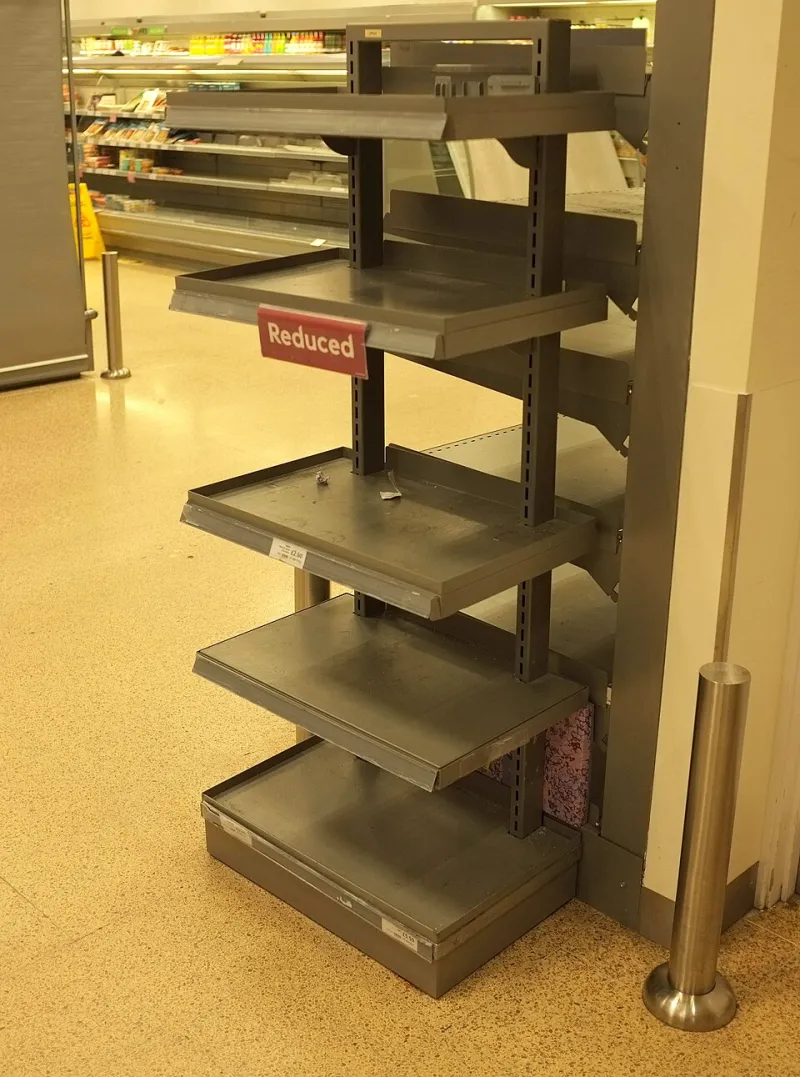
Photo: Derek Harper , CC BY-SA 2.0, via Wikimedia Commons
There is a particular moment, somewhere between the school run finishing and the freezer aisle lights flickering on, when a supermarket changes character. The same chiller that looked indifferent at 2pm suddenly has a small crowd around it. Someone is holding two packs of mince and doing arithmetic. Someone else has four croissants and no plan.
The reduced section is not a treasure hunt. It is a shop within a shop, and like any shop it will happily sell you things you did not want. The trick is not spotting yellow stickers. They are not hiding. The trick is deciding, quickly and with a clear head, which ones are food and which ones are just a discount with a use-by date.
When the stickers actually land
There is no national Yellow Sticker Hour. Anyone who tells you it is 6pm sharp has probably never worked a till. Stores sticker down in waves through the afternoon and evening, and the pattern depends on the branch, the day, the delivery schedule and how busy the department has been. A quiet Tuesday looks nothing like a Sunday before a bank holiday.
What you can rely on is the shape of it. Early stickers are modest — maybe a third off — and land mid-afternoon. Deeper cuts come later, often in the last two hours before closing, when the choice is discount or waste. Small convenience branches tend to sticker earlier and less predictably than big superstores. If you pass the same shop regularly, you will learn its rhythm within a fortnight. That is worth more than any list.
One etiquette note: do not hover. Staff are working, not running a game show. Ask politely when the final reductions usually go on, take the answer, and come back another day.
The one rule worth remembering
Before anything goes in the basket, ask a single question: do I have a plan and a freezer slot for this?
Both parts matter. A plan without freezer space means eating it by Thursday whether you fancy it or not. Freezer space without a plan means a grey lump in March. If the answer to either half is no, the sticker is not a bargain, it is a small tax on your good intentions.
That rule kills about two-thirds of the aisle immediately, which is exactly what it is for.
What earns its place
Meat and fish. This is where the real money sits, because protein is the expensive part of most weekly shops. Minced beef, chicken thighs, pork shoulder, whole birds, salmon portions. A 50% reduction on a £5 pack of mince saves more than any discount on a 90p loaf. Freeze in portions the day you buy, flatten bags so they stack, label with the date.
Bread and bakery. A reduced loaf is a freezer item wearing a paper hat. Slice it, bag it, freeze it, toast from frozen. Same for rolls, pittas, bagels and hot cross buns.
Vegetables and fruit. Bagged salad is a race against time and usually loses. Firmer things — carrots, potatoes, onions, cabbages, apples, peppers — are far more forgiving. Soft fruit can become crumble or compote the same evening.
Dairy. Yoghurt, milk and cheese all freeze or cook well, though texture shifts. Cheese is fine grated and frozen. Milk is fine for cooking. Yoghurt splits, so plan to bake with it rather than spoon it.
What to leave on the shelf
Pastries, chilled ready meals, fancy sandwiches, tubs of deli salad and anything in a plastic tray with a sauce sachet. Not because they are evil, but because they are the exact items the aisle is designed to move, and they rarely solve the problem of what is for tea on Wednesday. A reduced £2.50 pasta bake that feeds one is not cheaper than a £4 pack of mince that feeds four.
There is also a quiet trap in the premium ranges. A £6 item reduced to £3 is still a £3 you did not plan to spend on something you would never have bought at full price.
A tenner, spent properly
Here is a realistic haul from a large branch on a weekday evening. Prices vary by store and region, but the proportions hold.
- Two 500g packs of British beef mince at £2.10 each (from £4.50) — £4.20
- One whole chicken at £3.20 (from £6.50) — £3.20
- A bag of carrots at 25p — £0.25
- A 200g bag of spinach at 60p — £0.60
- Four own-brand yoghurts at 80p — £0.80
- A sliced wholemeal loaf at 45p — £0.45
- Six bananas at 35p — £0.35
Total: £9.85, and a week's worth of dinners that includes spaghetti bolognese, a traybake chicken with roast carrots, chicken and spinach soup from the carcass, and toast for breakfast. That is what the aisle is for.
Food safety, without the lecture
Reduced does not mean risky, but it does mean the clock is running.
- Use-by dates are not suggestions. Supermarkets cannot legally sell food past its use-by date, so stickers appear at or before it. Once you get it home, treat that date as firm.
- Get it cold quickly. Straight into a cool bag in summer, and into the fridge within an hour or so of leaving the shop.
- Freeze on the day of purchase, not the day before the date runs out. The freezer pauses the clock, it does not rewind it.
- Defrost in the fridge, overnight, on a plate. Not on the windowsill.
- Do not refreeze raw meat that has been thawed, and reheat cooked leftovers once, until piping hot.
- Best-before is a quality marker, not a safety line. Bread, crisps and dry goods are more flexible than the sticker suggests.
The walk home
The reduced aisle rewards a boring sort of discipline. Go late, go with a rough meal plan, keep an eye on the freezer, and be willing to walk away from a bargain that has no home. The people doing it well are not the ones with the fullest baskets. They are the ones who bought three things and knew exactly what Thursday looks like.