Smaller Glass, Better Sleep: A Three-Week Experiment With the Weeknight Pour
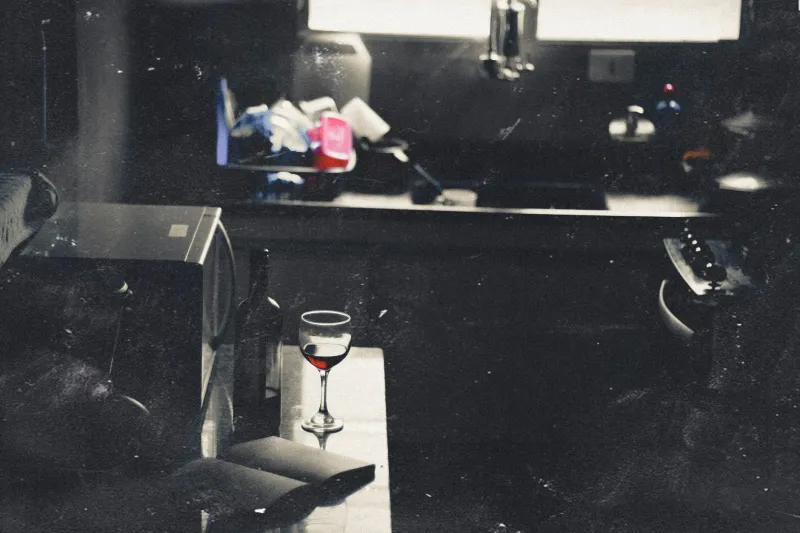
It is 6.12pm on a Tuesday. The laptop is shut, the kettle has not been switched on, and the corkscrew is already out. Nobody decided anything. That is the whole point.
The weeknight glass has very little to do with liking wine and quite a lot to do with marking a border. Work on one side, evening on the other, and a 175ml measure standing in for a full stop. So this is not a lecture about units, and it is not a suggestion that you bin the bottle. It is a straight look at what the habit costs, what it actually gives you, and a short experiment you can run without turning your evenings into a self-improvement project.
What the habit is actually made of
Most automatic drinking follows the same loop: a cue, a routine, a reward. The cue is rarely thirst. It is the front door, the second email of the evening, the children finally asleep, or the specific misery of a Wednesday in February. The routine is the pour. The reward is the switch-off.
Once that loop is set, the drink stops being a choice and becomes a piece of furniture. You would notice if the sofa moved. You would not notice the glass.
That matters because habits are not broken by willpower. They are broken by changing what happens immediately before them. Hold that thought for week three.
The calorie maths nobody prints on the label
A standard 175ml glass of 13% wine is about 2.3 units and roughly 130 to 160 calories, depending on the wine. A 250ml large glass pushes past 200. Two of those on a Friday, plus a Thursday, plus the odd Wednesday, and you are looking at somewhere between 1,200 and 1,800 calories a week from drink alone — before the bag of salt and vinegar that appears at 9pm because the wine loosened the brake.
That bag is not weakness. Alcohol lowers inhibition and nudges appetite, and salty snacks are engineered for exactly that moment. So the honest figure for a weeknight glass is often not the glass. It is the glass plus the 300-calorie side quest.
None of which means a glass is a moral failure. It means the glass is doing more than you think, and it deserves to be counted rather than absorbed.
The nightcap paradox
Alcohol helps you fall asleep. It does not help you stay asleep, and it does not help the sleep you get.
A drink before bed shortens the time it takes to drop off, then fragments the second half of the night as the body metabolises it. REM sleep gets squeezed. Snoring gets louder because the airway relaxes. Anyone who wakes at 3am with a dry mouth and a slightly anxious head knows the pattern.
The morning after two glasses is not a hangover, exactly. It is a low-grade fog: a bit flatter, a bit hungrier, a bit more likely to skip the walk. Three or four of those a week add up to a person who is permanently 15% below their own baseline and cannot quite work out why.
The three-week reset
Three weeks is long enough to learn something and short enough that you will actually finish it. No app, no spreadsheet, no dramatic announcement to your household.
Week one: measure, do not change
Change nothing. Drink exactly as you normally would, but pour one measure into a measuring jug on the first night so you know what your average glass actually holds. Most people are pouring 200ml-plus and calling it a small one.
Then jot one line in your phone each morning: how you slept, out of five. No judgement, no analysis. You are collecting data, not building a case.
Week two: shrink the vessel, stretch the drink
Same number of evenings, smaller pours. Switch to a 125ml measure, or use a smaller glass — the size of the glass quietly governs the pour. Try a spritzer, or alternate a normal glass with a 0.0% beer or an alcohol-free gin and tonic that you actually like the taste of rather than one you are enduring out of duty.
Keep a couple of nights properly dry, ideally not consecutive at first. The point is not abstinence. The point is proving to yourself that the evening works without the full pour.
One practical note: alcohol-free does not mean calorie-free, and 0.5% products are not considered suitable in pregnancy. Read the label like you would anything else.
Week three: change the cue, not just the drink
This is the week that does the work. Pick a wind-down cue that is not a drink and make it as reliable as the corkscrew: a hot shower, ten minutes round the block, a proper cup of tea in the good mug, sparkling water with lime in a wine glass, a phone call to someone you like.
It will feel ridiculous for four days, then it will feel like a habit, because that is how habits work. The glass was never the reward. The stopping was. You are just moving the stopping somewhere else.
The bits people get wrong
Do not replace wine with 500ml of sugary pop and call it a win. Do not bank the saved calories and spend them on a takeaway by Thursday. And do not assume that because you cut down on alcohol you can also cut down on sleep, vegetables or movement — the three work as a package, and none of them are dramatic on their own.
When this is not a three-week experiment
There is a line between a habit you would like to soften and something that needs a GP. UK guidance is no more than 14 units a week, spread over three or more days, and that is a ceiling rather than a target.
Speak to your GP or contact a specialist service if any of the following sounds familiar: you cannot stick to a limit you set for yourself, you need a drink to feel steady in the morning, you have withdrawal symptoms such as shaking or sweating when you stop, you are drinking to manage anxiety or low mood, or you are on medication that interacts with alcohol. If you have been drinking heavily for a long time, do not stop suddenly without medical advice — withdrawal can be dangerous. Drinkline runs free and confidential on 0300 123 1110.
For everyone else, this is just a small, low-stakes experiment. Smaller glass. Better sleep. A clearer sense of what you are actually choosing. That is a decent trade for three weeks.