The Three-Trip Tally: What Corner-Shop Top-Ups Really Cost
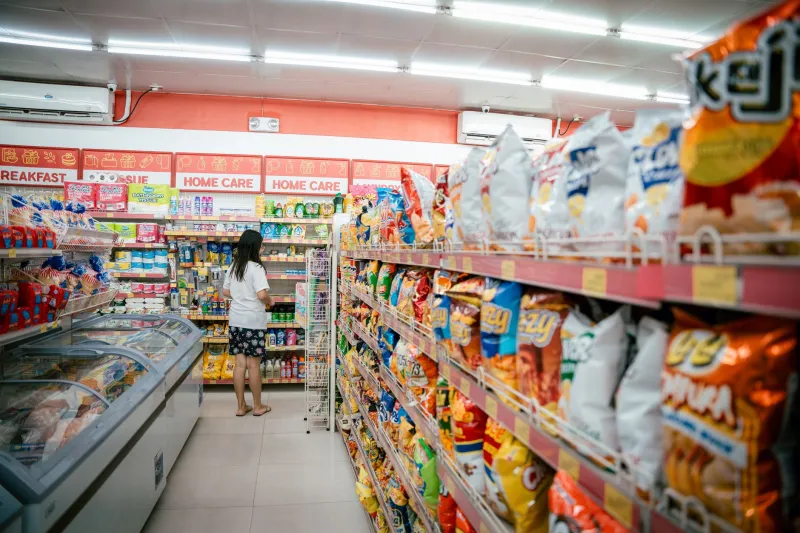
Three times a week, give or take, the same thing happens. It is gone six, the fridge is half a pint short of a plan, and the corner shop is ninety seconds away. You go in for milk. You come out with milk, a bag of crisps and something for tea that is not really tea. None of it feels like a food shop. That is the point.
What counts as a top-up trip
A top-up trip is not the weekly shop. It is the small, reactive basket: the £1.20 milk, the emergency crisps, the sandwich because lunch did not happen, the chilled ready meal because the day got away. It is bought close to home, often on foot, and usually without a list. The basket is small. The price per item is not.
Individually, these trips are forgettable. Together, they are a line item that most of us never look at.
A week in small baskets
Take an illustrative week — three trips, three receipts, roughly what a lot of UK households would recognise.
Monday, 6:40pm. Pint of semi-skimmed milk, £1.25. Sharing bag of crisps, £2.25. Total: £3.50.
Wednesday, 1:15pm. Lunch gap. Sandwich, £3.60. Flapjack, £1.70. Bottle of pop, £1.95. Total: £7.25.
Friday, 6:55pm. Something for tea. Chilled ready meal, £4.50. Bag of washed salad, £1.60. Total: £6.10.
Three trips. £16.85. Repeat that most weeks and you are looking at north of £850 a year — not on a big dramatic shop, but on small baskets that never felt like spending.
Now compare the same money with one planned supermarket shop. For roughly £17 you can pick up four pints of milk, a large bag of crisps, a loaf, six eggs, a tin of tomatoes, pasta, a block of cheese, a bag of apples, a tub of yoghurt, a tin of beans and a bag of frozen peas. That is not a week of meals on its own, but it is the spine of several. The corner-shop version gives you three eating moments and very little leftover.
The nutrition drift nobody puts on the receipt
The problem is not the milk. It is what comes with the milk. Small baskets skew towards snack foods because snack foods are what is by the till, what is shelf-stable and what is quick. Convenience stores are built for speed, not for meal-building. So the top-up trip tends to deliver salt, sugar and refined starch — and not much fibre or protein.
The Wednesday lunch is a good example. A sandwich, a flapjack and a sugary drink can easily clear 700 calories and still leave you hungry by half three, because there is very little there to keep you full. The Friday ready meal plus salad is not a disaster, but it is often light on protein and heavy on salt. You eat it, and by nine you are back in the cupboard.
That is the quiet double cost: you spend on food that does not satisfy, then you eat again later. The receipt says £16.85. The appetite says otherwise.
Why the corner shop still wins
None of this is a reason to pretend the corner shop is the enemy. It is open, it is close, and it does not require a car or a free hour. For a lot of people — shift workers, parents, anyone without a big supermarket within walking distance — it is genuinely useful.
The aim is not to ban the top-up trip. It is to stop it being the default. Keep the convenience; lose the drift.
Three swaps that keep the convenience
1. Buy the gap, not the mood. Keep a short list on your phone of the things that actually run out: milk, bread, eggs, yoghurt, tinned tomatoes. If it is not on the list, it is a treat, not a top-up. That one rule stops the crisps becoming part of the routine without turning the shop into a lecture.
2. Do one twenty-minute anchor shop. Not a full weekly shop — just five things that make a meal: milk, bread, eggs, cheese, tinned tomatoes. If those are in, the top-up trip becomes genuinely small. You are buying a pint, not rescuing the evening.
3. Make the top-up do a job. If you are already in the shop, choose something that combines: eggs and bread, beans and bread, yoghurt and fruit, pasta and passata. Corner shops usually stock at least one of those. It is not a perfect meal, but it is a meal — and it costs less than a ready meal plus a bag of crisps.
What this is not
This is not a ban on crisps, and it is not a claim that corner shops are ripping anyone off. Small shops charge more because they are small shops. That is the deal.
The point is simpler: three trips a week is fifteen or so a month, and fifteen small baskets is a food shop you never planned. Once you see the tally, the £1.20 milk stops being the story. The story is everything that comes back with it.