The Fridge Door Audit: Where a Week of Little Spoonfuls Actually Goes
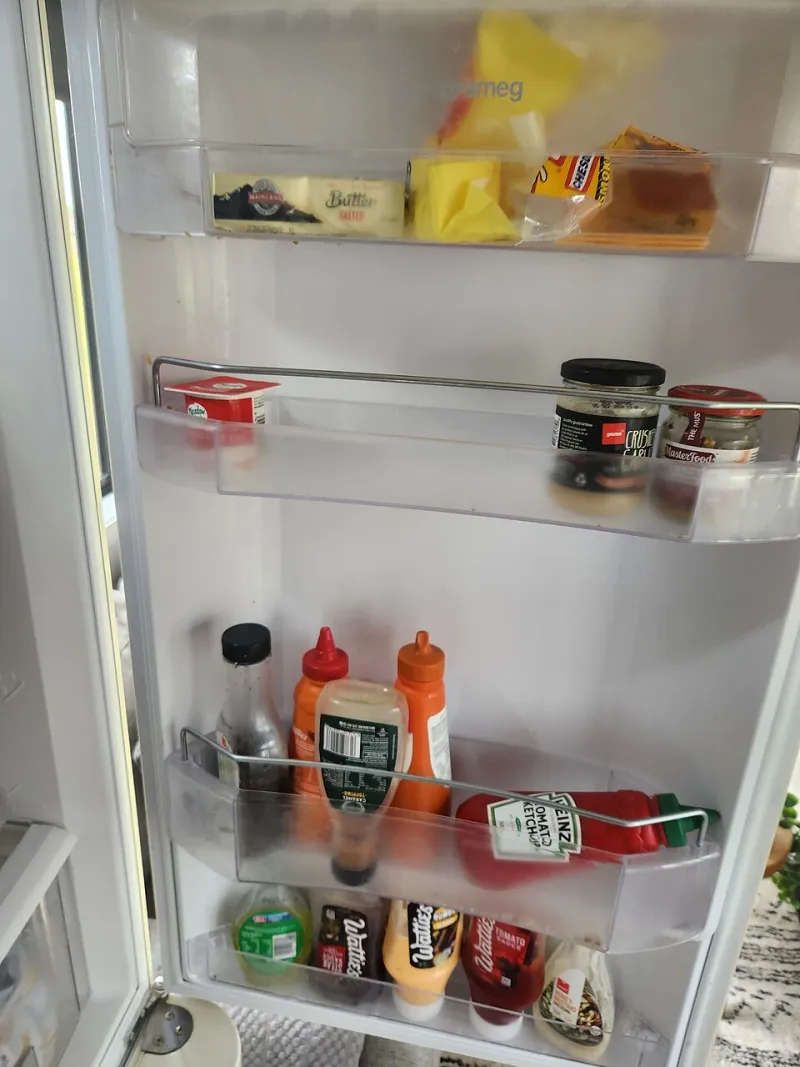
Photo: Panamitsu, CC BY-SA 4.0, via Wikimedia Commons
The fridge door is where sensible intentions go to be squirted. You can build a perfectly reasonable tea — lean protein, a pile of veg, a couple of slices of decent bread — and then finish it with three cheerful little spoonfuls that never appear on any meal plan. None of them is a problem on its own. Added together across a week, they can be the quietest part of your diet.
This is not a campaign against sauce. Dry sandwiches are a misery and plain steamed vegetables need help. But the door is a genuine blind spot because condiments do not feel like food. They feel like seasoning, or garnish, or moral support. And the labels, usually written per 100g, are almost designed to make a tablespoon feel theoretical.
Why the door gets missed
A jar of mayonnaise does not sit on a plate. It sits in the door, behind the milk, and gets used in a way that is hard to count: a bit on a sandwich, a spoon in a tuna mix, a dollop next to some chips. Ketchup goes on the side of the plate and then gets dipped into. Butter is scraped across toast while the kettle boils. These are not meals. They are habits.
The useful question is not whether mayonnaise is good or bad. It is how often, and how much. A level teaspoon of standard mayonnaise is roughly 5g and around 30 to 40 calories, depending on the brand. A level tablespoon is closer to 15g and 90 to 110 calories. Ketchup is lighter — a tablespoon is often around 15 to 20 calories — but it also tends to be used in bigger puddles. Butter is about 35 to 40 calories per teaspoon. Salad dressing can be 20 to 25 calories per teaspoon, or 60 to 75 per tablespoon, with creamy ones higher.
Put like that, none of it is shocking. Put it across a week and it starts to look like a second breakfast.
The teaspoon test
Get out an actual teaspoon and tablespoon. Not a soup spoon, not the one that lives in the cutlery drawer and has opinions. Level, not heaped, is the only way to compare.
| Item | Level teaspoon | Level tablespoon |
|---|---|---|
| Standard mayonnaise | about 30 to 40 kcal | about 90 to 110 kcal |
| Reduced-fat mayonnaise | about 15 to 25 kcal | about 45 to 70 kcal |
| Tomato ketchup | about 5 to 7 kcal | about 15 to 20 kcal |
| Vinaigrette dressing | about 20 to 25 kcal | about 60 to 75 kcal |
| Butter | about 35 to 40 kcal | about 105 to 115 kcal |
These are rough ranges because recipes vary. The point is not to memorise them. It is to notice the difference between a teaspoon and the generous glug that comes out when you tip a bottle over a bowl. A so-called drizzle can easily be two or three tablespoons. A spoon straight from the jar is not a measured spoon at all.
Try this for one meal: put the sauce in a small ramekin first. Use a teaspoon to move it from jar to ramekin. It feels fussy for about two days and then it becomes normal. You will also notice how often you go back for more simply because the jar is open.
Own-brand versus branded: what actually changes
Supermarket own-brand mayonnaise is usually very close to the big brands in calories per teaspoon. The cheap stuff may taste slightly different, but it is not automatically a lighter choice. Reduced-fat versions can save a meaningful amount — sometimes around half the calories — but check the label rather than the front of the jar. Some lower-fat mayonnaises add starch, sugar or extra water, and the texture changes.
Ketchup is a similar story. No-added-sugar ketchup can cut sugar, but it is not calorie-free and it is not automatically a better fit for every meal. Standard own-brand ketchup is often within a few calories of the branded version per tablespoon. If you use it twice a week, the difference is small. If you use it twice a day, it is worth a look.
Salad dressings are where the gap widens. A standard own-brand vinaigrette and a branded one can differ quite a lot, and light dressings vary wildly. Some are genuinely lower in calories; others compensate with sugar or thickeners. Compare per teaspoon, not per 100g. That is the portion you actually eat.
A seven-day door tally
You do not need an app. Stick a small note on the fridge or keep a pencil nearby. For one week, record every use from the door in level teaspoons or tablespoons. Mayonnaise and butter in teaspoons; ketchup and dressing in tablespoons. At the end of the week, add them up.
A realistic example might be: 15 teaspoons of mayonnaise, 10 tablespoons of ketchup, 12 teaspoons of butter and 6 tablespoons of dressing across the week. That is roughly 500 calories from mayonnaise, 175 from ketchup, 450 from butter and 400 from dressing. Around 1,500 calories over seven days, or about 215 a day. That is not a crisis. It is also not nothing. It might be the difference between a steady week and a slow drift.
Your tally might be much lower. It might be higher. Either way, it is information, not a verdict.
Swaps that do not require a new personality
You do not have to eat dry toast and sad salad. The aim is to keep the flavour and lose the unconscious extra spoonful.
- Use a small dish for sauce instead of eating from the jar or bottle at the table.
- Mix half mayonnaise with half thick yoghurt and a little mustard. It stretches further and tastes sharper.
- Put vinegar or lemon juice on salad first, then add oil by the teaspoon. The leaves taste dressed with less oil.
- Use mustard, hot sauce, pickle, salsa or a spoon of yoghurt with herbs when you want a hit of flavour without a lot of calories.
- Measure butter with a teaspoon rather than scraping the knife across the block. A teaspoon spread thinly covers a slice of toast better than it sounds.
- Keep the bottle in the door, not on the counter. Out of sight is not a magic cure, but it breaks the automatic reach.
What not to do
Do not declare war on the fridge door. Condiments make vegetables palatable, and bland food is not a long-term plan. If you strip out every sauce, you are more likely to abandon the whole thing by Thursday and order something with a side of chips.
Pick one or two items you use most often. Measure them for a week. Change the serving habit, not the entire personality. If you have a medical condition or a reason to follow a specific diet, use this as a conversation starter with your GP or dietitian rather than a rulebook.
The fridge door is a small, cheap place to look. One week, one teaspoon, one honest tally. You may find a hundred calories a day you did not know you were spending — or you may find nothing at all. Both are useful answers.