The Wednesday-Proof Lunchbox: Packing for a Proper UK Workday

Photo: Shealeah Craighead, Public domain, via Wikimedia Commons
Most packed lunches do not fail because you lack willpower. They fail because a Tuesday-morning version of you assembled something hopeful and a Wednesday-afternoon version of you opened it, sighed, and bought a meal deal instead. The gap between those two people is usually texture, temperature and a bit of forward planning.
This is not a lecture about meal prep. It is a workday lunch strategy for people who have about four minutes at 7.40am and a shared office fridge with a questionable shelf. The aim is simple: a lunch that still looks appetising at noon, costs less than the average £5-to-£7 high-street lunch, and does not require a second personality to maintain.
The three-part lunchbox that actually works
Think of the box in three jobs, not one recipe. You want a sturdy base, a protein that holds up, and a crunchy or sharp finish. Miss one and the whole thing feels like punishment by Wednesday.
The sturdy base is the bulk: cold pasta, rice, couscous, potato, a decent wholemeal roll, oatcakes, or a grain pouch from Aldi or Lidl. It needs to survive four hours in a bag without turning to wallpaper paste. Cooked pasta and rice are fine if you cool them quickly, refrigerate them promptly and eat within 24 hours — the Food Standards Agency is clear that cooked rice should not sit around at room temperature.
The protein that holds up might be leftover roast chicken, tinned tuna, boiled eggs, cheddar, halloumi, hummus, edamame, falafel or a pot of Greek-style yoghurt. The point is not to hit a perfect protein target at lunch. It is to stop the 3pm biscuit raid caused by a lunch that was basically four lettuce leaves and optimism.
The crunchy or sharp finish is the bit that makes it feel like food rather than fuel. Pickled onions, a few cornichons, sliced apple, carrot batons, cucumber kept separate, a small pot of salsa, rocket, or a spoonful of sauerkraut. Sharpness cuts through the beige. Crunch gives the mouth something to do. Both matter more than most diet advice admits.
What to buy in a normal UK supermarket
You do not need a specialist shop. A workable basket from Tesco, Sainsbury’s, Asda or Morrisons might include: own-brand wholemeal wraps, a bag of pasta, a tin of chickpeas, a tin of tuna, a block of mature cheddar, a tub of hummus, a bag of carrots, a cucumber, cherry tomatoes, apples, a lemon, a small jar of pickled onions, and a bag of frozen edamame. Add eggs and yoghurt if your fridge can take it.
If you shop at Co-op or a corner shop for top-ups, buy the sturdy things there too: oatcakes, cheese portions, a banana, a tin of beans. The less fragile the ingredient, the better it copes with being carried around in a rucksack next to a laptop charger.
Cost per lunch will vary, but a realistic home-packed box built from supermarket own-brand staples often lands around £1.50 to £2.50. That is not a moral victory — it is just maths. Two avoided meal deals a week can pay for a decent lunchbox and a decent flask.
The Wednesday collapse is usually a texture problem
By Wednesday, most packed lunches have gone wrong in one of four ways. The bread is damp. The salad has steamed itself. The leftovers were never really lunch material. Or the box was packed on Sunday with the best intentions and is now a science experiment at the back of the office fridge.
The fix is separation and realism. Keep wet things — hummus, dressing, yoghurt, tuna mayo — in small pots or jam jars. Put cucumber and tomato in a separate compartment or on top of the box, not under the pasta. If you are using leftover roast dinner, pack the gravy separately or leave it at home. A dry lunch is not a tragedy; a soggy one is.
Also be honest about what you will actually eat cold. Some foods are lovely hot and grim cold: roast potatoes, most fish, and anything that was previously covered in gravy. Cold roast chicken, frittata, pasta salad, rice with roasted veg and cheese are far safer bets.
Food safety for desk drawers and office fridges
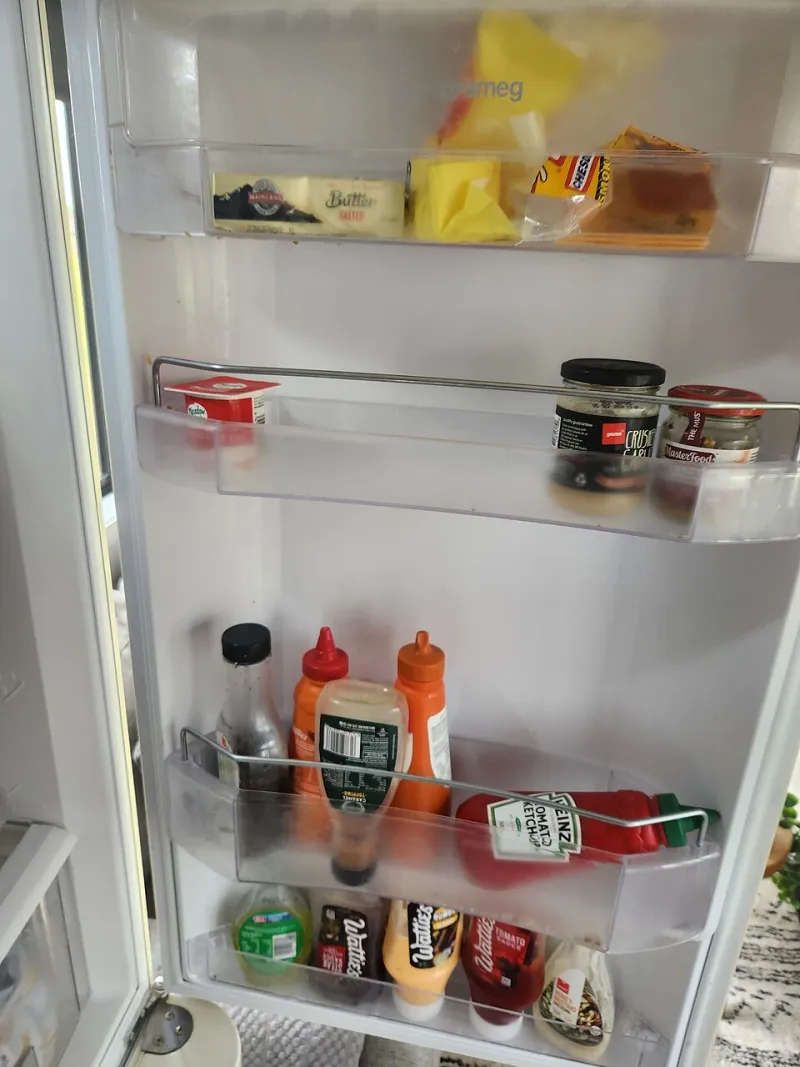
A packed lunch is a small food-safety exercise. Cool cooked food before it goes in the fridge, but do not leave it on the counter for hours. Use a cool bag or an ice pack if the lunch will be in a warm office or a commute. At work, put it in the fridge as soon as you arrive, not at 11am when you remember.
Office fridges are often colder than they look and fuller than they should be. Keep your box sealed, label it if the fridge is shared, and do not push it to the back where it will be forgotten until Friday. If there is no fridge, an insulated bag with a frozen ice block is the sensible workaround. The Food Standards Agency’s two-hour rule is a useful guide for food left out of the fridge — if it has been sitting at room temperature for longer than that, do not gamble.
For leftovers, reheat only if you have a microwave and the food is piping hot all the way through. If you are not sure, do not. A £2 lunch is not worth a bad afternoon.
A prep routine for busy households
Sunday is not for making five identical boxes. It is for removing friction. Spend 25 minutes cooking a tray of roasted veg, boiling some eggs, making a batch of pasta or rice, and chopping carrots and cucumber into a tub. Keep the wet and the dry separate. That is it.
On weeknights, do a five-minute box build: base at the bottom, protein in a pot, crunchy thing on top, fruit on the side. If you are making dinner anyway, cook one extra portion of the sturdy base. If you are having roast chicken, save a portion before it becomes everyone’s pickings.
Keep an emergency shelf at work or in your bag: oatcakes, a tin of tuna, a small bag of nuts, a piece of fruit. The aim is not to be perfect. It is to make the fallback less expensive and less depressing than the queue at the sandwich shop.
A packed lunch does not need to be Instagram-ready. It needs to survive the commute, taste decent at noon and make Wednesday feel less like a crisis. Build the box around those three jobs and the rest tends to follow.